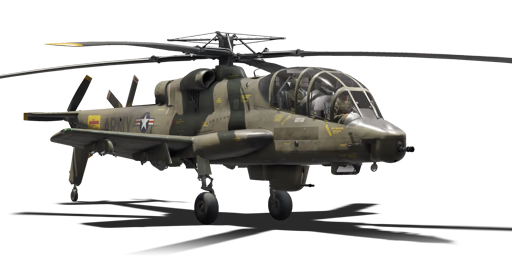
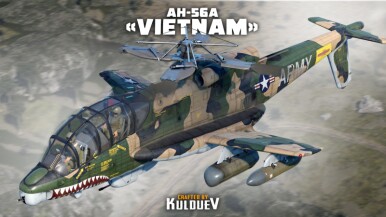
The Lockheed AH-56A Cheyenne was an experimental US Army project aimed at creating the service's first dedicated attack helicopter. Crowned the winner of the Army's Advanced Aerial Fire Support System (AAFSS) programme in late 1965, the Cheyenne was a cutting-edge, unique design that could have revolutionised the attack helicopter. As a compound helicopter design equipped with features such as a low-mounted wing and pusher propeller, the Cheyenne was capable of speeds just shy of 400 km/h, exceptionally fast, especially for its time. Unfortunately, its technological complexity and a string of sometimes fatal accidents during testing ultimately led to production contracts for the Cheyenne being dropped in 1969. Development of the helicopter continued until 1972, when the Army cancelled the programme in its entirety.
A modified version of the Cheyenne was submitted for the Advanced Attack Helicopter (AAH) programme, most notably with the pusher propeller omitted and being equipped with two engines for added reliability, but it was ultimately not selected for the programme. The AAH programme would later lead to the AH-64 Apache, which would soon become the dedicated attack helicopter for the US Army in the following decades, filling the role once meant for the Cheyenne.
Introduced in Update 2.51 "Spearhead", the AH-56A Cheyenne offers a high-risk, high-reward playstyle for US helicopter players with its high speed but lack of options against enemy fire. While its lack of an RWR, IRCM, or countermeasures may make it less survivable when detected, its unmatched speed and good agility allow it to get into position very quickly for a swift ambush strike. With its thermal imager, CCIP, and 30 mm cannon, the Cheyenne can deliver a lethal barrage of ordnance before swiftly disappearing behind terrain, using the helicopter's superior mobility to disengage before the enemy knows what hit them.