
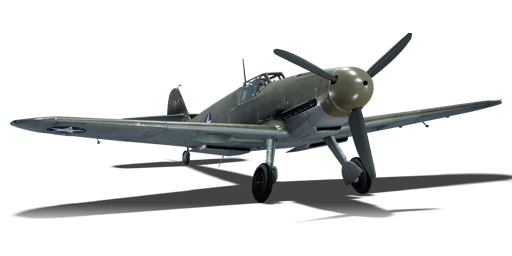



The Messerschmitt Bf 109 F-4 is a German fighter aircraft from World War II designed by Willy Messerschmitt. The F-4 differed from previous versions primarily due to its aerodynamically refined fuselage, new and more powerful Daimler-Benz DB 601E engine, and modified armament. These features made the F-4 one of the most formidable fighters of its time. The Bf 109 F-4 was delivered to the Luftwaffe in large numbers from May 1941 to May 1942 and was used extensively in a variety of operations.
On May 29, 1942, two Bf 109 F-4s from 9./JG3 lost their bearings. After running out of fuel, they made an emergency landing behind enemy lines in the USSR, about 30 kilometers southeast of Chuguev. In November 1942, one of these Bf 109s, factory number 7640, which had previously used the tail number "Yellow 9," was delivered to the United States. After the transfer, the aircraft was painted in standard olive green camouflage and given the tail number EB-1, which was later changed to EB-100. This "Friedrich" successfully passed the entire test program. The test reports gave special praise to the German fighter's controllability, maneuverability, engine, and automation systems.
The American Bf 109 F-4 has been in the game since the start of the Open Beta Test prior to Update 1.27. The Bf 109 is a versatile fighter with powerful armaments, an excellent climb rate, and other decent performance characteristics. This combination allows beginners to easily learn the tactics of playing "boom & zoom" and allows experienced pilots to play using their energy. However, the Bf 109 is vulnerable to enemy fire, particularly to damage to its engine and cooling systems. Even in undamaged condition, the DB-601 requires careful monitoring of the temperature sensors to ensure that WEP is available when needed. Unlike the German F-4, it lacks any suspended armaments.

flaps
flaps
flaps
brake
| Belt | Belt filling | Armor penetration (mm) at a distance: | |||||
|---|---|---|---|---|---|---|---|
| 10 m | 100 m | 500 m | 1000 m | 1500 m | 2000 m | ||
| IT/IT/APHE/HEI | 21 | 19 | 8 | 3 | 1 | 1 | |
| IT/HEI/HEI/AP-I | 27 | 24 | 14 | 7 | 3 | 2 | |
| AP-I/HEI/HEI/HEI/HEI/IT | 27 | 24 | 14 | 7 | 3 | 2 | |
| APHE/APHE/APHE/IT | 21 | 19 | 8 | 3 | 1 | 1 | |
| FI-T/FI-T/FI-T/IT/IT | 21 | 19 | 8 | 3 | 1 | 1 | |
| HEI/HEI/HEI/APHE/AP-I | 27 | 24 | 14 | 7 | 3 | 2 | |
| Belt | Belt filling | Armor penetration (mm) at a distance: | |||||
|---|---|---|---|---|---|---|---|
| 10 m | 100 m | 500 m | 1000 m | 1500 m | 2000 m | ||
| AP-T/AP-I/AI | 9 | 8 | 6 | 3 | 0 | 0 | |
| AP-T/AP/AI/AP-I | 13 | 12 | 7 | 3 | 2 | 0 | |
| AP-T | 9 | 8 | 6 | 3 | 0 | 0 | |
| AI/AP/AP/AP/AI | 13 | 12 | 7 | 3 | 2 | 0 | |

 2 x (60 / 185 / 310) %
2 x 142 %
2 x (60 / 185 / 310) %
2 x 142 %
Flight performance | |
|---|---|
Survivability |
|---|
Weaponry |
|---|