Type 61 tank
The Type 61 (61式戦車) was Japan’s first domestically developed MBT after World War II, designed by Mitsubishi Heavy Industries for the Japan Ground Self-Defense Force (JGSDF). Introduced into service in 1961, it marked Japan’s return to indigenous armoured vehicle development following the post-war demilitarisation period.
After the Korean War, Japan was initially expected by the GHQ to rearm with US-supplied M26, M47, or M48 tanks, but these plans were abandoned due to political, logistical, and infrastructure constraints. As a result, early post-war armoured units relied on surplus M4A3E8 Sherman and M24 Chaffee tanks, while domestic development proceeded under heavy industrial limitations and reliance on Allied components.
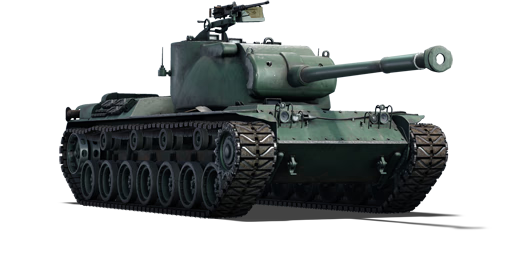
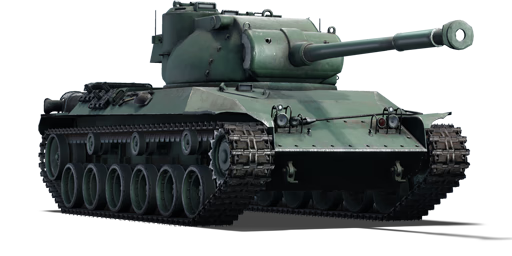
Development of the Type 61 began in 1955, centred on the 90 mm M3A1 gun, with a design emphasising light armour and strict size limitations to suit Japan’s terrain and rail transport infrastructure. The project originated under the ST-A prototype programme, which progressed through several experimental designs. Early prototypes, such as the ST-A1, reflected some continuity with Imperial Japanese tank design philosophy, featuring a low profile and a layout reminiscent of vehicles like the Chi-Ha, as well as drivetrain concepts derived from transmissions originally prototyped for the Chi-He and further developed for the Chi-Ri. Later prototypes, most notably the ST-A3, explored more advanced concepts, including a fully assisted autoloader not realised on the Chi-Ri, though this proved costly and complex. Ultimately, the ST-A4 represented the most balanced and mature design, aligning closely with JGSDF requirements and forming the basis for the production Type 61, while the ST-A3 was completed too late for consideration.
The Type 61 saw few upgrades during its service life, largely due to its role as an interim design while Japan continued to refine its domestic tank doctrine. The Type 61 (B) introduced minor but practical improvements, such as revised external fittings and fuel tank arrangements, while the later Type 61 (C) primarily reflected a change in standard paint scheme from olive drab to the JSDF bicolour camouflage. These revisions were not treated as distinct variants in service and were generally designated simply as Type 61. Several modernisation concepts were studied, most notably the Type 61 Kai, which proposed a redesigned turret mounting a 105 mm gun to keep pace with newer tanks like the Type 74, but these plans were ultimately abandoned due to cost and the limitations of the original chassis. The Type 61 remained in frontline service until 2000, when it was fully replaced by the Type 74 and Type 90.

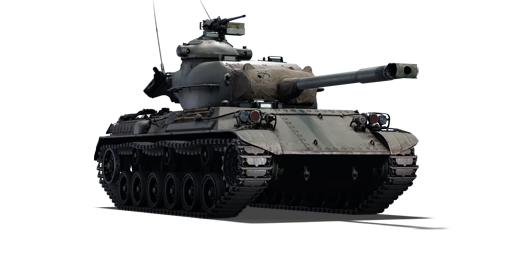
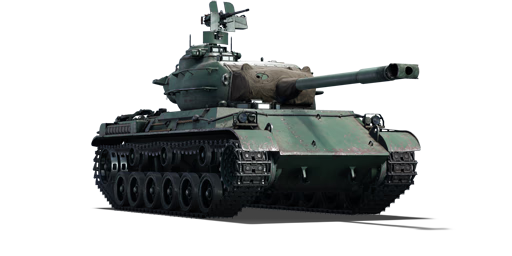
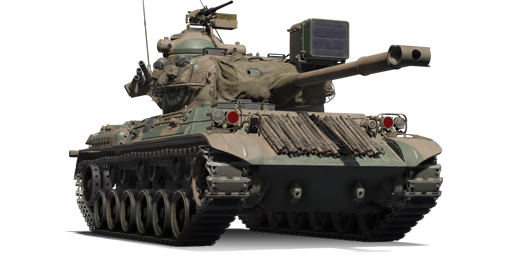
 Type 61 (B)